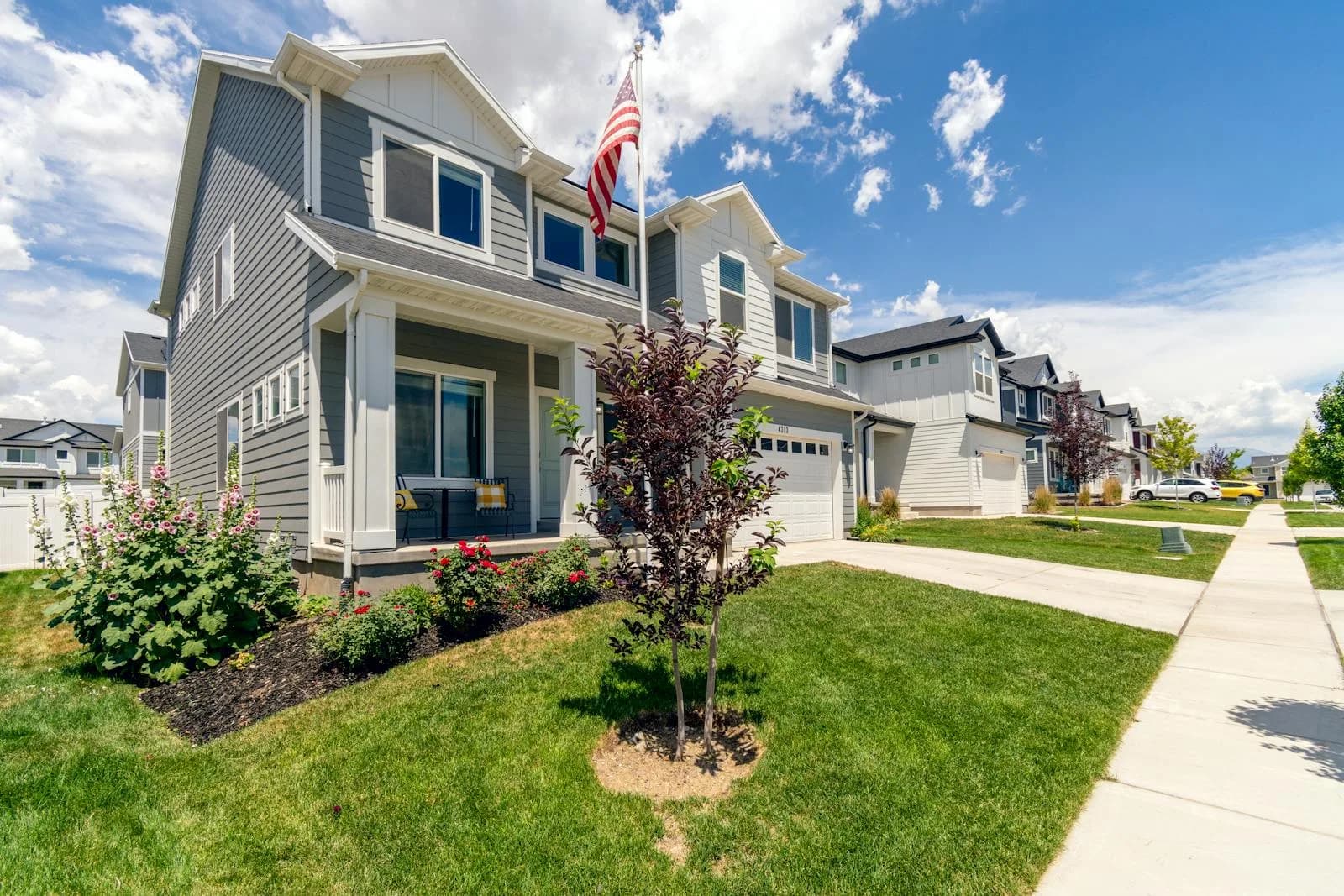
Build to rent in Placer County is the strategy of acquiring brand-new single-family or townhome inventory — either an entire purpose-built rental subdivision or a handful of new-construction homes inside a for-sale neighborhood — and operating it as a long-term rental portfolio in Roseville, Rocklin, Lincoln, or unincorporated Placer County. Heading into 2026, a stabilized new construction single family rental in Lincoln CA or West Roseville pencils at roughly a 4.8 to 5.6 percent cap rate at current market rents, with rents in the $2,650 to $3,400 range for a typical 3-bedroom, 2-bath new build and stabilized occupancy in the mid-90s, in line with Yardi Matrix's national BTR occupancy reading of 94.9 percent as of November 2025.
That is a tighter cap rate than a 1990s-era resale single family rental in the same Placer County zip code (which still trades closer to 5.5 to 6.2 percent), but new construction comes with materially lower capital expenditure reserves, a 10-year structural warranty, builder concessions on rate buydowns, and tenants who reliably renew at 65 to 75 percent. This 2026 guide walks through the real numbers behind BTR investment Sacramento 2026 investors are underwriting — the Placer County rental development pipeline, the BTR-vs-scattered-site SFR comparison, financing options, tax and depreciation implications, and where in Lincoln, Rocklin, and Roseville the model actually works.
This is not a national overview. We operate single family rentals across Roseville, Rocklin, Lincoln, Granite Bay, Loomis, and Auburn at Lifetime Property Management, and the numbers below come from our own Placer County portfolio data blended with publicly reported research from John Burns Research & Consulting, Yardi Matrix, the Greater Sacramento REALTOR® market reports, CBRE, and Fannie Mae's multifamily economic commentary.
What "Build to Rent" Means in Placer County
Nationally, build to rent (BTR) refers to purpose-built single-family rental subdivisions — full neighborhoods of detached or attached homes designed from day one to be operated as a single rental portfolio, often by an institutional owner like Pretium, Tricon, AMH, or Invitation Homes. In Placer County, that pure institutional BTR model exists in pockets (a handful of horizontal-apartment communities and a few small townhome subdivisions in Lincoln and West Roseville), but the more common 2026 investor entry point is what the Greater Sacramento REALTOR® market reports call "shadow BTR" — individual investors and small funds acquiring new construction homes inside primarily for-sale neighborhoods and operating them as rentals.
That distinction matters because the underwriting, financing, and tax treatment are different depending on which lane you enter.
- Institutional BTR. A purpose-built rental community in Lincoln or West Roseville bought in bulk (10 to 200 homes), financed with agency debt or a private credit facility, and operated under a single property management contract. Cap rates land in a tight 5.0 to 5.5 percent band at 2026 stabilized rents.
- Small-fund BTR / scattered new build. An investor or family office buying 3 to 15 new construction homes from a Lennar, KB Home, Tri Pointe, Toll Brothers, or DR Horton subdivision in Lincoln, Rocklin, or West Roseville. Cap rates run 4.8 to 5.6 percent at market rents.
- Single-asset new construction rental. One investor buying one new home as a long-term rental. Financing is conventional (DSCR or owner-occupant-then-convert), pricing is full retail, and the math hinges on the specific builder incentive package.
For the rest of this guide, "build to rent Placer County" covers all three lanes. Where the strategy diverges, we will flag it.
Why Placer County is in the conversation
Three structural factors put Placer County on the 2026 BTR map.
- Active new construction pipeline. Lincoln, West Roseville (Fiddyment Farm, Westpark, Sierra Vista), and the Placer One / Placer Ranch development (2,200+ acres between West Roseville and Rocklin slated for roughly 5,500 new homes and multifamily units) are still actively delivering inventory through 2026. Builders are offering 5.99 to 6.49 percent buydowns on 30-year fixed mortgages and $15,000 to $40,000 in closing-cost incentives — terms a resale seller cannot match.
- Strong tenant demand. Roseville, Rocklin, and Lincoln pull medical, tech, and education employers (Kaiser Permanente Roseville, Sutter Roseville, Adventist Health, HP Inc., Sierra College, Western Sierra Medical Center) plus the Sacramento commuter base. The Greater Sacramento REALTOR® rental reports show Placer rents holding firm even when Sacramento County rents drift, with Roseville commanding roughly 9.5 percent higher housing costs and stickier tenants who renew longer.
- Lower turnover than scattered older stock. Yardi Matrix reported national BTR occupancy at 94.9 percent as of November 2025, with tenant renewal rates running materially higher than legacy SFR. Our Placer County portfolio shows similar dynamics — new construction tenants renew at 65 to 75 percent versus 50 to 60 percent on 1980s and 1990s stock.
2026 Cap Rates and Rent Benchmarks for New Construction Rentals
The single most asked question we get from out-of-state and Bay Area investors is: What is the cap rate on new construction rentals in Roseville and Lincoln? The honest 2026 answer is 4.8 to 5.6 percent stabilized, with a clear premium for proximity to Kaiser Roseville, HP Roseville, and the Highway 65 corridor, and a clear discount for outlying Lincoln neighborhoods 25+ minutes from the nearest major employer.
Typical 2026 new construction rental benchmarks
| Asset | Price (2026) | Market rent | Cap rate (stabilized) |
|---|---|---|---|
| 3BR/2BA new build, Lincoln (95648) | $555,000 - $625,000 | $2,650 - $2,950 | 4.9 - 5.3% |
| 4BR/2.5BA new build, Lincoln (95648) | $640,000 - $735,000 | $3,050 - $3,400 | 5.0 - 5.4% |
| 3BR/2.5BA new build, West Roseville (95747) | $680,000 - $770,000 | $3,050 - $3,400 | 4.7 - 5.1% |
| 4BR/3BA new build, West Roseville (95747) | $770,000 - $895,000 | $3,350 - $3,800 | 4.8 - 5.2% |
| 3BR/2.5BA new build, Rocklin (95765, 95677) | $690,000 - $790,000 | $3,100 - $3,500 | 4.8 - 5.2% |
| Townhome new build, Lincoln/Rocklin | $485,000 - $565,000 | $2,500 - $2,850 | 5.1 - 5.6% |
The cap rate column is calculated as net operating income divided by all-in price, after deducting realistic 2026 operating expenses (property management at 8 to 10 percent of effective gross income, property tax at the assessed-value rate of roughly 1.10 to 1.25 percent inclusive of Mello-Roos in newer subdivisions, insurance at $1,400 to $2,200 annually, vacancy reserve at 5 percent, maintenance reserve at 4 to 6 percent of gross rents for new builds — materially lower than the 8 to 10 percent we use on pre-2000 stock).
For a wider Roseville and Sacramento rental pricing context, including median rent data and submarket bands, see our Placer and Sacramento rental pricing guide and the Roseville rental market report 2026.
BTR vs. Scattered-Site SFR: A Side-by-Side in Placer County
The cleanest way to evaluate build to rent against the existing single family rental investment Placer County playbook is on a 5 to 10 year hold basis. New construction trades at a tighter cap rate but spends less on capital, attracts a different tenant, and grows rents off a higher base. Older scattered stock trades at a wider cap rate but eats more capex, leases to a more turnover-prone tenant, and has narrower rent ceiling room before competing with new inventory.
Apples-to-apples: 2026 hypothetical, Lincoln 3BR comparison
| Line item | New build 2026 (Lincoln) | 1995 resale (Lincoln) |
|---|---|---|
| Purchase price | $590,000 | $520,000 |
| Builder rate buydown / concession | $25,000 (closing + 5.99% rate) | None |
| Effective acquisition basis | $565,000 | $520,000 |
| Gross market rent (monthly) | $2,800 | $2,500 |
| Vacancy (5% / 6%) | ($1,680) | ($1,800) |
| Annual property tax (incl. Mello-Roos) | ($7,080) at 1.20% | ($5,460) at 1.05% |
| Insurance | ($1,600) | ($1,850) |
| Property management (8%) | ($2,688) | ($2,400) |
| Maintenance + capex reserve | ($1,680) at 5% of rents | ($3,000) at 10% of rents |
| HOA dues (if applicable) | ($1,200) | ($0 - $720) |
| Net operating income | $17,672 | $15,490 |
| Stabilized cap rate | 3.13% on $565K basis | 2.98% on $520K basis |
Note the numbers above use a 5 percent vacancy assumption and full retail acquisition. A well-negotiated builder package or off-list purchase can move the new build cap rate into the high-4s to mid-5s. A renovated 1995 resale with cosmetic work already done can move that scattered SFR into similar territory. The right comparison is not which lane "wins" in the abstract — it is which lane fits your hold horizon, capital stack, and tolerance for turnover and capex.
Where new construction wins
- Lower capital expenditure for years 1 through 10. Builder warranties (typically 1 year all-systems, 2 to 5 year mechanical, and 10 year structural under the California Right to Repair Act, SB 800) cover the bulk of major-component failures. Our Placer County managed portfolio shows new construction rentals running 30 to 50 percent below pre-2000 stock on annual capex in years 1 through 7.
- Higher tenant retention. New homes attract longer-term tenants — relocating professionals, dual-income families, retiring downsizers — who renew at 65 to 75 percent. Lower turnover means lower turnover cost. See our tenant turnover cost Sacramento guide for the full ROI math.
- Rate buydowns and closing-cost credits. Active 2026 builder incentives in Lincoln (Tri Pointe at Independence, Lennar at Lincoln Crossing, KB Home, DR Horton Express) and West Roseville (Lennar at Fiddyment Farm, Tri Pointe at Westpark, Toll Brothers at Sierra Vista) include 5.99 percent permanent rate locks, 2-1 temporary buydowns, and $15,000 to $40,000 in flex dollars usable on closing costs or upgrades. A resale seller cannot match a buydown without losing material price.
- Depreciation reset. A brand-new home gives you 27.5 years of straight-line depreciation on a fresh, fully-improved basis — which can be supercharged with a cost segregation study. See our rental property depreciation California guide for cost segregation and OBBBA bonus depreciation rules.
Where scattered-site SFR wins
- Wider entry cap rate. Pre-1990 Roseville, Rocklin, Auburn, and Lincoln stock still trades 50 to 150 basis points wider than new construction at 5.5 to 6.7 percent.
- Lower property tax. A 1990s Lincoln home reassessed at the resale price often carries a lower effective tax rate than a new build in a Mello-Roos community facilities district (CFD), where the all-in property-tax rate runs 1.20 to 1.65 percent versus 1.05 to 1.15 percent in older neighborhoods.
- Forced appreciation potential. Older homes respond to renovation. A $35,000 kitchen-plus-bath remodel on a 1995 Rocklin rental can push rents $250 to $400 per month, a meaningful unlock you cannot replicate on already-new construction.
- Less exposure to new supply. When the next BTR community opens half a mile away, the new-build cohort competes directly. Older, well-located stock in established neighborhoods sees less direct competition.
Lincoln, Rocklin, and Roseville Inventory: Where the New Builds Are
The 2026 Placer County rental development map is concentrated in three corridors. Most of the actively delivering inventory sits along Highway 65 between West Roseville and Lincoln, in the Whitney Ranch / Whitney Oaks portion of Rocklin, and in the Twelve Bridges and Independence-at-Lincoln Crossing portion of Lincoln.
Lincoln (95648)
Lincoln has been the leading edge of Placer County new construction since the early 2000s. Sun City Lincoln Hills, the original 6,783-home Del Webb 55+ community built between 1999 and 2008, kicked off the trend but is now largely resale-only. The current 2026 active-build neighborhoods are different geography:
- Lincoln Crossing (95648, west of Highway 65). Active builders include Lennar, Tri Pointe (Independence), and KB Home. New 3 and 4-bedroom detached homes priced $555,000 to $735,000 with 2-1 buydowns and $15,000 to $25,000 in flex dollars. Mello-Roos in most phases pushes effective property tax to roughly 1.30 to 1.45 percent.
- Twelve Bridges (95648, north Lincoln near the golf course). Established master-planned community with continuing in-fill build by smaller builders. Slightly higher price points ($625,000 to $810,000) and lower Mello-Roos burden.
- Western Lincoln (north of Twelve Bridges Drive). Newest sections delivering in 2026 with Lennar and DR Horton Express product. Watch the commute — anything north of Ferrari Ranch Road runs 30+ minutes to Kaiser Roseville in morning traffic.
For a Lincoln-specific operating overview see our Lincoln property management guide.
Rocklin (95677, 95765)
Rocklin's 2026 build activity centers on Whitney Ranch and the Placer One development (the 2,200+ acre master plan straddling the Roseville-Rocklin line slated for 5,500 new homes and multifamily units). Active builders include Tri Pointe, Toll Brothers, Lennar, and Pulte. Pricing is materially higher than Lincoln — 3-bedroom new builds in Whitney Ranch start around $690,000 and 4-bedroom plans run $750,000 to $895,000. Mello-Roos varies by phase; verify the assessor's parcel data before underwriting. Operating context in our Rocklin property management guide.
West Roseville (95747)
Roseville's last large greenfield development is concentrated in Fiddyment Farm, Westpark, Sierra Vista, and the Placer Vineyards / Placer Ranch boundaries. 2026 active builders include Lennar, Tri Pointe, KB Home, and Toll Brothers. Pricing is the highest in the three-corridor comparison — 3-bedroom new builds in West Roseville run $680,000 to $770,000 and 4-bedroom plans hit $770,000 to $895,000. Cap rates are tighter than Lincoln but the tenant pool is deeper (Kaiser Roseville, HP, Sutter Roseville commuter base). See our Roseville property management guide and buying rental property in Roseville guide.
Financing a New Construction Rental in Lincoln, Rocklin, or Roseville
The financing answer in 2026 depends on whether the property will be owner-occupied first, purchased as a pure investment from day one, or acquired through a portfolio loan as part of a multi-property strategy.
Option 1: DSCR loan (debt service coverage ratio)
DSCR loans qualify on the property's rents rather than personal income. In 2026, Placer County investor DSCR pricing is running roughly 7.25 to 8.25 percent on 30-year fixed, with 20 to 25 percent down and a minimum DSCR of 1.10 to 1.20. The builder rate buydown that originated on a primary residence does not transfer to a DSCR loan, so be cautious when comparing builder marketing rates to the actual investor financing terms.
Option 2: Owner-occupant conversion (FHA, conventional 5% down, VA)
If the buyer plans to live in the home for 12 months and then convert it to a rental, conventional 5% down or FHA 3.5% down financing is available, often combined with the builder's rate-buydown package. This is the cheapest entry path but carries a 12-month owner-occupancy attestation. For a detailed walk-through of the house-hack version of this strategy on duplexes, see our Sacramento and Placer County FHA house-hacking guide.
Option 3: Conventional investor financing
Conventional Fannie Mae and Freddie Mac investor loans (typically 20 to 25 percent down, full income documentation, max 10 financed properties) remain the lowest-rate option for borrowers with W-2 or strong self-employment income. 2026 rates for Placer County investor conventional are running 7.00 to 7.75 percent on 30-year fixed. Builder buydowns sometimes apply on investor product but at reduced flex-dollar amounts.
Option 4: 1031 exchange into new construction
For investors selling a low-basis older Sacramento or Bay Area rental, a 1031 exchange into a new construction Placer County home can reset depreciation and lower future capex risk simultaneously. The new-build purchase must close within the 180-day exchange window — confirm builder delivery timing matches the exchange clock before closing the sale on the relinquished property. See our Sacramento 1031 exchange guide for the timing and identification rules.
Tax and Depreciation Considerations
The 2026 federal tax environment favors new construction rental investment in several ways, but the math requires a real conversation with a Placer County rental-savvy CPA before closing.
Depreciation reset
A brand-new single family rental gives you a fresh 27.5-year straight-line depreciation schedule on the building portion (typically 75 to 85 percent of the purchase price after backing out land value). On a $590,000 Lincoln rental with $470,000 attributed to the improvements, that produces roughly $17,090 per year in straight-line depreciation — a meaningful shield against the rental's gross income.
Cost segregation acceleration
A cost segregation study identifies short-life components (5, 7, and 15-year property) inside the building basis and accelerates their depreciation. Combined with bonus depreciation under the One Big Beautiful Bill Act (OBBBA) framework, a cost-seg study on a $590,000 Lincoln new build can generate $50,000 to $90,000 of first-year depreciation deductions. The economics work best for investors with active real estate professional status or significant passive losses to offset. Detailed walkthrough in our rental property depreciation California guide.
California property tax and Mello-Roos
New construction in Placer County master-planned communities almost always carries Mello-Roos community facilities district (CFD) assessments on top of the standard 1 percent ad valorem property tax. CFD assessments in Lincoln Crossing, Whitney Ranch, Fiddyment Farm, Westpark, and Sierra Vista typically run $2,400 to $5,500 per year for 25 to 40 years from the original delivery date. The full effective tax rate is what matters — verify it on the assessor's parcel data and the bond's official statement before underwriting.
State income tax and the FTB
California Franchise Tax Board (FTB) rules track federal depreciation for residential rentals, but cap rates and underwriting need to account for California's 9.3 to 13.3 percent state income tax brackets when comparing Placer County returns to Phoenix, Boise, or Dallas BTR. See our California landlord bookkeeping guide for the FTB-specific reporting requirements.
2026 Risks to Watch
The build to rent thesis is not risk-free. Three structural pressures are worth pricing into Placer County underwriting before closing.
- BTR operating expense growth outpacing rent growth. John Burns Research & Consulting reported Q1 2025 BTR operating expenses rising 3.2 percent year over year against just 1.3 percent blended rent growth. Insurance, property tax reassessments, and HOA/CFD escalations are the primary drivers. Underwrite conservative expense growth (3 to 4 percent annually) against modest rent growth (1.5 to 3 percent annually) for the first 36 months.
- Supply concentration. Lincoln and West Roseville have multiple builders delivering inventory simultaneously. When 200 homes deliver in a six-month window, the local rental market temporarily oversupplies and concessions appear. Yardi Matrix's November 2025 BTR advertised-rent reading was $2,180, down $4 month-over-month — a national signal that even strong-occupancy markets are seeing pricing pressure. Stagger acquisitions across phases or different submarkets to avoid all your rentals competing with each other.
- California regulatory exposure. AB 1482 rent caps apply to most non-single-family rentals and to certain corporate-owned single-family product. Single-family homes owned by individuals with the proper exemption disclosure are typically exempt — but the disclosure must be in writing. Newer 2025 legislation (AB 325 on rent pricing algorithms, AB 2493 on screening fees) layers additional compliance. See our new California rental laws 2026 landlord guide for the running compliance checklist.
For an investor profile and submarket comparison between the City and Placer, see Sacramento vs Placer County rental investment 2026.
Institutional BTR Activity in the Sacramento Region
Pure institutional BTR communities (full purpose-built rental subdivisions owned by a single operator) are still a minority of the Sacramento region's new rental inventory, but the institutional flow is increasing. Catalyst Capital Partners' 2026 outlook flagged BTR as one of the most attractive entry points in single-family residential, citing CBRE data showing stabilized BTR communities trading at cap rates 50 to 75 basis points tighter than comparable Class A multifamily — a measurable premium for the perceived quality of the asset class. Commercial Observer's January 2026 reporting on the sector noted continued fragmentation between institutional BTR and scattered-site small-investor SFR, with the institutional lane increasingly bifurcating from the mom-and-pop landlord market.
For Placer County investors, the practical takeaway is that institutional capital is competing for the same builder inventory you are evaluating. In 2025 and into 2026 we have seen Lennar, KB Home, and DR Horton sell pad-by-pad or bulk-package deliveries to small funds and 1031 buyers at slight discounts to retail when the builder is closing a phase. If you are buying 4+ homes from the same subdivision, ask directly about a bulk package — the discount is sometimes there.
The Bottom Line: Who Build to Rent Fits in Placer County
Build to rent and new construction rental investment Placer County works best for three investor profiles in 2026.
- 1031 exchangers exiting older Bay Area or Sacramento rentals. A new Lincoln or West Roseville home resets depreciation, eliminates 10 to 20 years of pent-up capex, and trades older deferred-maintenance risk for newer Mello-Roos and HOA exposure. Net effect for many investors is positive on a 10-year hold.
- Out-of-state and Bay Area investors who want hands-off rentals. New construction with builder warranty, professional property management, and high-renewal tenants is the closest thing to a turnkey rental in California. See our out-of-state landlord guide California.
- House-hackers willing to live in the home for a year. The cheapest path into a new build rental is owner-occupant conventional or FHA financing for the first 12 months, then converting to a rental. The builder rate buydown applies, the down payment is small, and you start the depreciation clock the moment the home goes onto the rental market.
The strategy fits less well for investors targeting double-digit cash-on-cash returns from day one (Placer County new construction rarely pencils above mid-single-digit cash-on-cash at current financing), for value-add operators who want to renovate and re-rent (new homes have no renovation upside to capture), and for investors who prioritize the absolute lowest entry basis over operating quality.
Frequently Asked Questions
Is build to rent profitable in Sacramento and Placer County?
Yes, on a measured basis. A stabilized new construction single-family rental in Lincoln, Rocklin, or West Roseville pencils at roughly a 4.8 to 5.6 percent cap rate at 2026 rents and current financing costs, with cash-on-cash returns running 3 to 6 percent depending on down payment and rate buydown. That is tighter than 1990s-era resale rentals in the same Placer County zip codes (5.5 to 6.2 percent cap), but new construction comes with lower capex, a 10-year structural warranty, and meaningfully higher tenant retention. The strategy is profitable for investors holding 7 to 15 years, layering in depreciation and cost segregation, and operating with a property manager who specializes in Placer County. It is less attractive for investors targeting double-digit day-one cash-on-cash returns.
What is the cap rate on new construction rentals in Roseville?
For 2026, new construction single-family rentals in Roseville (95747) trade at stabilized cap rates of roughly 4.7 to 5.2 percent. A typical 3-bedroom new build prices $680,000 to $770,000 and rents for $3,050 to $3,400 per month. Cap rate is calculated after deducting realistic operating expenses including 8 to 10 percent property management, 1.10 to 1.25 percent property tax (including Mello-Roos in newer subdivisions), insurance at $1,400 to $2,200 annually, 5 percent vacancy, and a 4 to 6 percent maintenance reserve. Roseville cap rates run 20 to 40 basis points tighter than Lincoln cap rates because of the deeper tenant pool (Kaiser, HP, Sutter, Adventist commuter base) and lower vacancy expectations.
Can you buy a new construction home as a rental in Lincoln CA?
Yes. Most Lincoln new construction builders (Lennar, Tri Pointe, KB Home, DR Horton, Toll Brothers) sell to investor buyers, though a handful of builders restrict the first wave of a new community to owner-occupants only. Builders generally do not match owner-occupant rate buydowns on investor purchases, so verify the financing path before signing. The two cheapest entry routes are (1) owner-occupant financing followed by conversion to a rental after 12 months, and (2) a DSCR loan from day one. Investor DSCR financing on a Lincoln new build runs 7.25 to 8.25 percent on 30-year fixed with 20 to 25 percent down. Read our Lincoln property management guide for the local operating considerations.
How does build to rent compare to existing SFR in Placer County?
Build to rent (new construction) trades at a 50 to 100 basis point tighter cap rate than scattered-site existing single family rental investment Placer County strategies. New construction wins on capital expenditure (30 to 50 percent lower for years 1 through 7), tenant retention (65 to 75 percent renewal vs 50 to 60 percent on pre-2000 stock), and depreciation reset. Existing scattered-site SFR wins on entry cap rate, lower property tax (no Mello-Roos in most older neighborhoods), and the option to force appreciation through renovation. The right answer depends on hold horizon — new construction usually outperforms over 10+ year holds, while older renovated stock often outperforms on 3 to 5 year value-add plays. Our Sacramento vs Placer County rental investment 2026 guide expands on submarket selection.
What is the difference between BTR and a traditional rental property in Placer County?
BTR (build to rent) refers to homes purpose-built or purpose-acquired for the rental market, typically as part of a coordinated portfolio strategy. In Placer County, BTR usually means an institutional operator's purpose-built community or a small-fund acquisition of 3 to 15 new homes from a single builder phase. A traditional rental property is any single home — new or old — owned individually and rented out, with no coordinated portfolio strategy or institutional ownership. Operationally, BTR communities often have shared amenities (clubhouse, pool, dedicated maintenance staff), while scattered new construction rentals operate exactly like a traditional SFR.
Are Mello-Roos taxes a deal-breaker for new construction rentals?
Not usually, but they need to be priced into underwriting. Mello-Roos community facilities district (CFD) assessments in Placer County new construction neighborhoods typically add $2,400 to $5,500 per year to property tax bills for 25 to 40 years from the original community delivery date. That extra annual cost shaves 50 to 100 basis points off the cap rate compared to a non-CFD older home at the same purchase price. Tenants generally do not adjust their rent expectations for Mello-Roos — the cost falls on the owner. Verify the exact CFD assessment, the remaining bond term, and any scheduled escalators by reviewing the bond's official statement and the Placer County Assessor's parcel data before closing.
What property management fees apply to new construction rentals?
Placer County property management fees for new construction single-family rentals run 8 to 10 percent of effective gross income for full-service management, with leasing fees of 50 to 100 percent of one month's rent. New construction rentals are often slightly cheaper to manage than older stock because of lower maintenance call volume and longer tenant retention. For a complete fee structure breakdown including leasing fees, renewal fees, and inspection charges, see our property management cost California guide and cost of hiring a property manager in Roseville.
Get a Build-to-Rent Underwriting Review on Your Placer County Target
Lifetime Property Management operates single-family rentals across Roseville, Rocklin, Lincoln, Granite Bay, Loomis, Auburn, and the rest of Placer County. We have first-hand operating data on more than a dozen new construction rentals in Lincoln Crossing, Twelve Bridges, Whitney Ranch, Fiddyment Farm, and Westpark, and we work routinely with investors evaluating builder inventory before they sign a purchase contract.
If you are looking at a specific new construction home or builder phase in Lincoln, Rocklin, or Roseville and want a clean underwriting review — realistic 2026 rent, full operating expense build, cap rate, cash-on-cash, sensitivity to financing terms, and a comparison against equivalent scattered-site Placer County alternatives — request a build-to-rent underwriting review. We will pull market comps, verify the Mello-Roos and HOA exposure on the specific parcel, model the after-management cash flow, and walk you through the financing and tax decisions before you sign. If you are earlier in the decision, start with our buying rental property in Roseville guide or the self-managing vs property manager analysis.
Frequently Asked Questions
Is build-to-rent profitable in Sacramento?
Yes, on a measured basis. A stabilized new construction single-family rental in Lincoln, Rocklin, or West Roseville pencils at roughly a 4.8 to 5.6 percent cap rate at 2026 rents and current financing costs, with cash-on-cash returns running 3 to 6 percent depending on down payment and rate buydown. That is tighter than 1990s-era resale rentals in the same Placer County zip codes (5.5 to 6.2 percent cap), but new construction comes with lower capex, a 10-year structural warranty under California SB 800, and meaningfully higher tenant retention. The strategy is profitable for investors holding 7 to 15 years, layering in depreciation and cost segregation, and operating with a property manager who specializes in Placer County. It is less attractive for investors targeting double-digit day-one cash-on-cash returns.
What's the cap rate on new construction rentals in Roseville?
For 2026, new construction single-family rentals in Roseville (95747) trade at stabilized cap rates of roughly 4.7 to 5.2 percent. A typical 3-bedroom new build prices $680,000 to $770,000 and rents for $3,050 to $3,400 per month. Cap rate is calculated after deducting realistic operating expenses including 8 to 10 percent property management, 1.10 to 1.25 percent property tax (including Mello-Roos in newer subdivisions), insurance at $1,400 to $2,200 annually, 5 percent vacancy, and a 4 to 6 percent maintenance reserve. Roseville cap rates run 20 to 40 basis points tighter than Lincoln cap rates because of the deeper tenant pool (Kaiser, HP, Sutter, Adventist commuter base) and lower vacancy expectations.
Can you buy a new construction home as a rental in Lincoln CA?
Yes. Most Lincoln new construction builders (Lennar, Tri Pointe, KB Home, DR Horton, Toll Brothers) sell to investor buyers, though a handful of builders restrict the first wave of a new community to owner-occupants only. Builders generally do not match owner-occupant rate buydowns on investor purchases, so verify the financing path before signing. The two cheapest entry routes are owner-occupant financing followed by conversion to a rental after 12 months, and a DSCR loan from day one. Investor DSCR financing on a Lincoln new build runs 7.25 to 8.25 percent on 30-year fixed with 20 to 25 percent down.
How does build-to-rent compare to existing SFR in Placer County?
Build to rent (new construction) trades at a 50 to 100 basis point tighter cap rate than scattered-site existing single family rentals in Placer County. New construction wins on capital expenditure (30 to 50 percent lower for years 1 through 7), tenant retention (65 to 75 percent renewal vs 50 to 60 percent on pre-2000 stock), and depreciation reset. Existing scattered-site SFR wins on entry cap rate, lower property tax (no Mello-Roos in most older neighborhoods), and the option to force appreciation through renovation. The right answer depends on hold horizon — new construction usually outperforms over 10+ year holds, while older renovated stock often outperforms on 3 to 5 year value-add plays.
What is the difference between BTR and a traditional rental property in Placer County?
BTR refers to homes purpose-built or purpose-acquired for the rental market, typically as part of a coordinated portfolio strategy. In Placer County, BTR usually means an institutional operator's purpose-built community or a small-fund acquisition of 3 to 15 new homes from a single builder phase. A traditional rental property is any single home — new or old — owned individually and rented out, with no coordinated portfolio strategy or institutional ownership. Operationally, BTR communities often have shared amenities (clubhouse, pool, dedicated maintenance staff), while scattered new construction rentals operate exactly like a traditional SFR.
Are Mello-Roos taxes a deal-breaker for new construction rentals in Lincoln and West Roseville?
Not usually, but they need to be priced into underwriting. Mello-Roos community facilities district (CFD) assessments in Placer County new construction neighborhoods typically add $2,400 to $5,500 per year to property tax bills for 25 to 40 years from the original community delivery date. That extra annual cost shaves 50 to 100 basis points off the cap rate compared to a non-CFD older home at the same purchase price. Tenants generally do not adjust their rent expectations for Mello-Roos — the cost falls on the owner. Verify the exact CFD assessment, the remaining bond term, and any scheduled escalators by reviewing the bond's official statement and the Placer County Assessor's parcel data before closing.
Ready for Stress-Free Property Management?
Get a free rental analysis and see how much your property could earn.

